
What chemical reaction makes banana bread rise?

What chemical reaction makes banana bread rise?
Introduction
Chemistry in the kitchen! It may sound like a peculiar concept but you see, cooking is also those things that involve chemical reactions. No, we’re not talking about pouring two dangerous substances and seeing them explode. Not that kind of chemistry, at least not today. Instead, we’re going to get into the science that blooms within our favorite loaf of banana bread. The towering presence, the stunning fluffiness – a lot takes place to get a loaf of banana bread to rise. But what chemical reactions are involved in this process? Let’s explore.
Key Ingredients in Banana Bread
Before diving into the chemical reactions, it’s essential to understand the key ingredients involved in baking banana bread. The primary components include bananas, flour, eggs, butter, baking soda, and sugar. The star ingredient, bananas, offer aesthetic appeal, texture, and natural sweetness. Meanwhile, flour forms the building block or structural base of the bread, while eggs act as the binding agent.
Further, butter imparts richness and flavor, while sugar, apart from sweetening the bread, contributes to its texture and color. Lastly, the largely unheralded hero of this culinary creation, baking soda, is the leavening agent that triggers the chemical reaction to make the banana bread rise. Now, onto the main event – the chemistry!
Leavening and The Role of Baking Soda
Leavening might sound like a unique term but it’s critical in the world of baking. It’s the process that makes baked goods rise and become soft, instead of turning into brick-like objects. The heroes of this crucial process are leavening agents, which can be either biological (like yeast) or chemical (like baking soda and baking powder).
When you’re baking banana bread, the leavening agent commonly used is baking soda (or sodium bicarbonate). But why baking soda? For its capability to undergo a chemical reaction generating carbon dioxide gas, crucial for making the banana bread rise!
The Baking Soda Reaction
So, how does this reaction work? Baking soda, or sodium bicarbonate, is a base. When it gets mixed with an acidic ingredient – think buttermilk, lemon juice, vinegar, or even the natural acids in your star ingredient, bananas – it starts to react. The acid-base reaction leads to the production of carbon dioxide gas.
Sodium Bicarbonate + Acid —-> Carbon Dioxide + Other Products
This production of carbon dioxide in turn creates bubbles in the dough, causing the mixture to expand, or in other words, rise. As the bread bakes in the oven, these gas bubbles get trapped within the dough’s structure, giving banana bread its fluffy, light texture and characteristic height.
Additionally, The Maillard Reaction
While the leavening process is vital, there’s another important chemical reaction taking place when your banana bread bakes – the Maillard Reaction. Named after the French chemist Louis-Camille Maillard, who first described it in the early 20th century, this reaction gives the bread its enticing brown crust.
This is a form of non-enzymatic browning involving the reaction between reducing sugars and amino acids, which occur when the bread is baked at high heat. In simpler terms, it’s the process that explains why your banana bread turns a lovely golden brown – and why it smells so delicious while baking!
Final Thoughts
All in all, baking is a fascinating blend of art and science. Each ingredient plays a crucial role and imparts unique characteristics to the end product. In the case of banana bread, the chemical reaction between the acid in the dough and the base in baking soda, along with the Maillard Reaction, create a sumptuously risen, light, and golden-brown loaf. So, the next time you indulge in making – or indulging in – banana bread, you can appreciate the culinary science magic that went into creating your treat!
References:
- “How Baking Works: Exploring the Fundamentals of Baking Science.” Figoni, Paula I. John Wiley & Sons, Inc., 2011.
- “On Food and Cooking: The Science and Lore of the Kitchen.” McGee, Harold. Scribner, 2004.
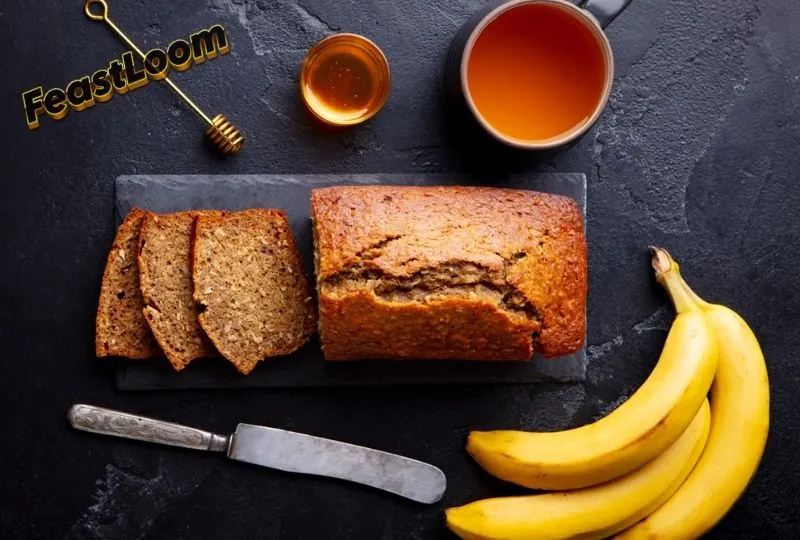
What chemical reaction makes banana bread rise?

Conclusion
Understanding the chemistry involved in baking is key for successful results. One such example is banana bread, a favorite treat in many homes. Most noteworthy is how baking soda or baking powder, also known as leavening agents, trigger a chemical reaction to make this beloved bread rise. The primary reaction is the production of carbon dioxide gas during the baking process due to the interaction between the sodium bicarbonate found in the baking powder or soda and the other ingredients. This gas gets trapped in the bread batter creating bubbles making the banana bread rise and become fluffy. Armed with this knowledge, the baking process can now be more accurate and delicious. Baking is truly a combination of art and science!
FAQ
1. Does banana bread require a leavening agent?
Yes, banana bread requires a leavening agent, such as baking soda or baking powder, to enable it to rise.
2. Why is it necessary to use a leavening agent?
A leavening agent triggers a chemical reaction, producing a gas that gets trapped in the batter, causing it to rise and become fluffy.
3. What happens if I don’t use a leavening agent in my banana bread?
Without a leavening agent, your banana bread will not rise and will remain dense and heavy.
4. Can I use both baking powder and baking soda in my banana bread?
You can use both, but remember they have different strengths. Generally, it’s best to stick to the recipe’s recommendation.
5. Can I replace baking powder with baking soda in my banana bread?
Baking soda is stronger than baking powder, so you’ll need less of it. For every teaspoon of baking powder, you can substitute 1/4 teaspoon baking soda.
6. What is the role of banana in banana bread?
Besides the obvious flavor, ripe bananas add sweetness, moisture and help with the bread’s rising.
7. Is there a specific type of flour required for banana bread?
Many recipes call for all-purpose flour, but whole wheat or gluten-free alternatives can also be used.
Artigos relacionados

When you make purchases through the links available on our site, we may receive an affiliate commission at no additional cost to you.